Review 15 Books Monthly: Your 2026 Blog Guide

For bloggers aiming to elevate their content, a Step-by-Step Guide: How to Effectively Review 15 Books Per Month for Your Blog in 2026 is now essential. This detailed approach covers strategy, execution, and optimization, providing a clear path to increased productivity and audience engagement.
The goal to review 15 books monthly for your blog by 2026 is an ambitious yet achievable target for dedicated content creators. This comprehensive guide outlines the methodologies and tools necessary to streamline your review process, ensuring quality output and consistent engagement. It focuses on practical steps, time-tested techniques, and strategic planning to transform your book blogging endeavors.
Achieving this level of productivity requires a disciplined approach, from book selection to final publication. Understanding the nuances of efficient reading, effective note-taking, and compelling writing will be paramount. This article serves as your definitive resource for mastering the art of high-volume, high-quality book reviews, setting you up for significant blogging success.
Step-by-Step Guide: How to Effectively Review 15 Books Per Month for Your Blog in 2026 is shaping today’s agenda with new details released by industry sources and successful bloggers. This update prioritizes what changed, why it matters, and what to watch next, in a straightforward news format.
Strategic Book Selection: Maximizing Impact and Efficiency
The foundation of any successful high-volume book review strategy lies in astute book selection. This initial phase dictates not only the quantity but also the quality and relevance of your content, directly impacting reader engagement and blog growth. Choosing the right titles ensures that your efforts are well-placed and yield maximum returns in terms of audience interest and SEO.
A diverse yet focused selection can attract a broader readership while maintaining your blog’s niche authority. Consider a mix of popular new releases, timeless classics, and titles within your specific genre of expertise. This balance helps keep your content fresh and appealing to various segments of your audience, fostering a dynamic and engaging platform.
Effective book selection also involves anticipating trends and understanding your audience’s preferences. Leverage data from past reviews, social media discussions, and publishing industry news to inform your choices. This proactive approach allows you to stay ahead of the curve and consistently deliver content that resonates deeply with your target demographic.
Identifying Your Niche and Audience
Before selecting books, a clear understanding of your blog’s niche and target audience is critical. This clarity will guide your choices, ensuring that each book reviewed aligns with your blog’s mission and appeals directly to your readers. Without this focus, you risk scattering your efforts and diluting your brand.
- Analyze your blog’s existing readership demographics and interests.
- Research popular genres and authors within your chosen niche.
- Identify underserved sub-genres where you can establish authority.
By defining who you are writing for and what they seek, you can curate a selection of books that genuinely excites your audience. This targeted approach is fundamental to building a loyal readership and ensuring the long-term success of your book review blog.
Leveraging Advance Reader Copies (ARCs) and NetGalley
Accessing Advance Reader Copies (ARCs) is a powerful method to get ahead in the book review landscape. Platforms like NetGalley and Edelweiss provide early access to upcoming titles, allowing you to publish reviews promptly upon release. This timeliness can significantly boost your blog’s visibility and authority.
Securing ARCs requires a well-established blog presence and a track record of consistent, high-quality reviews. Publishers look for bloggers who can provide thoughtful analysis and reach a relevant audience. Develop a professional pitch and maintain a strong review profile on these platforms to increase your chances of approval.
Integrating ARC reviews into your monthly schedule can provide a steady stream of fresh content that capitalizes on current literary buzz. This strategy is essential for any blogger aiming to review 15 books monthly and remain a relevant voice in the book community. It requires diligent planning and commitment to meet publication deadlines.
Streamlining Your Reading Process: Speed and Comprehension
To successfully review 15 books monthly, an optimized reading process is indispensable. This doesn’t mean sacrificing comprehension for speed, but rather adopting techniques that enhance both. Strategic reading allows you to extract key information efficiently while still appreciating the narrative and thematic elements of each book.
Developing an active reading style, which includes previewing, questioning, and summarizing, can significantly reduce reading time without compromising understanding. This method transforms passive reading into an analytical exercise, preparing you for the review writing stage. It’s about making every reading session count towards your ultimate goal.
Furthermore, dedicating specific blocks of time daily to reading, free from distractions, can dramatically increase your output. Consistency is more valuable than sporadic long sessions. By integrating reading into your routine, you build momentum and make the ambitious target of reviewing 15 books monthly a more manageable reality.
Effective Note-Taking Strategies for Reviews
Efficient note-taking is a cornerstone of high-volume book reviewing. It allows you to capture crucial details, plot points, character developments, and thematic observations as you read, saving significant time during the review writing phase. A well-organized system of notes ensures that no important aspect is overlooked.

Consider using a combination of digital and physical tools for your notes. Digital platforms offer searchability and easy organization, while physical notes can sometimes foster deeper engagement with the text. Experiment to find a system that best suits your personal workflow and helps you to review 15 books monthly effectively.
- Highlight key passages and write marginalia directly in the book (if it’s your copy).
- Maintain a dedicated notebook or digital document for each book, categorizing notes by plot, character, themes, and personal reactions.
- Utilize mind maps or bullet points for quick reference and structural outlining.
These strategies transform raw reading into structured data, making the transition to writing seamless and efficient. The goal is to minimize the effort required to recall information, allowing you to focus on crafting compelling reviews.
Time Management and Reading Schedules
Implementing a strict time management system is crucial for achieving the goal to review 15 books monthly. This involves allocating specific time slots for reading, writing, and editing, treating these activities as non-negotiable appointments. A structured schedule prevents procrastination and ensures consistent progress.
Break down your reading goal into smaller, daily targets. For instance, if you aim to read 15 books, you might need to complete two to three books per week. This approach makes the overall goal less daunting and provides clear milestones to track your progress. Adjust your daily reading targets based on the length and complexity of the books.
- Create a detailed weekly schedule, blocking out dedicated reading hours.
- Prioritize reading during your most productive times of the day.
- Use timers to maintain focus and prevent over-engagement with a single book.
By adhering to a well-planned schedule, you can cultivate the discipline required to consistently meet your monthly review targets. This structured approach is a powerful enabler for anyone looking to review 15 books monthly and maintain a high-quality blog.
Crafting Compelling Reviews: Quality and Consistency
The ultimate aim of reviewing 15 books monthly is not just quantity, but also the delivery of high-quality, engaging content. Each review must offer value to your readers, providing insightful analysis, clear recommendations, and a distinctive voice. Consistency in quality builds trust and establishes your blog as a reliable source for book recommendations.
Developing a standardized review structure can significantly streamline your writing process without stifling creativity. A consistent format helps readers navigate your content and know what to expect, enhancing their overall experience. This structure can include sections for plot summary, character analysis, thematic exploration, and a final verdict.
Regular editing and proofreading are non-negotiable for maintaining professional standards. Even with a high volume of content, grammatical errors and awkward phrasing can detract from your credibility. Dedicate time for a thorough review process, perhaps even enlisting a trusted reader for a fresh perspective, ensuring every review shines.
Developing a Standardized Review Template
A standardized review template is a powerful tool for maintaining consistency and efficiency when you review 15 books monthly. This template provides a framework that ensures all essential elements are covered in each review, from plot summary to personal critique. It reduces decision fatigue and allows you to focus on the unique aspects of each book.
The template should be flexible enough to accommodate different genres and styles while providing a clear structure. Include prompts for key areas such as the book’s premise, notable characters, writing style, pacing, and overall impact. A well-designed template can cut down writing time significantly.
- Outline key sections: Introduction, Plot Summary (spoiler-free), Characters, Themes, Writing Style, Overall Impression, Recommendation.
- Include a consistent rating system (e.g., star ratings, numerical scores).
- Pre-write common phrases or disclaimers to save time during drafting.
By utilizing a template, you can ensure that every review is comprehensive and well-organized, making the process of writing for 15 books monthly far more manageable and effective.
Writing Engaging Introductions and Conclusions
The introduction and conclusion of your book reviews are critical for capturing and retaining reader interest. An engaging introduction hooks the reader, clearly stating what the review will cover and why it matters. It sets the tone and invites them to delve deeper into your analysis.
Conversely, a compelling conclusion provides a satisfying wrap-up, reiterating your main points and offering a final, memorable thought or recommendation. It’s an opportunity to leave a lasting impression and encourage readers to consider the book or explore other content on your blog. Both elements are vital for a successful review.
- For introductions, start with a hook: a thought-provoking question, a bold statement about the book, or its immediate impact on you.
- Clearly state the book’s title, author, and genre early in the introduction.
- For conclusions, summarize your overall assessment without simply repeating earlier points; offer a final recommendation or a broader reflection.
Mastering these elements will significantly enhance the readability and impact of your reviews, contributing to your goal to review 15 books monthly with high quality.
Optimizing for SEO and Audience Engagement
Beyond writing excellent reviews, optimizing your content for search engines and actively engaging your audience are crucial for blog growth. An outstanding review won’t reach its full potential if it isn’t discoverable. Implementing SEO best practices ensures your reviews appear in relevant search results, driving organic traffic to your blog.
Audience engagement transforms casual readers into loyal followers and advocates for your content. This involves more than just publishing; it requires active participation in comments sections, social media, and community building. A thriving community around your blog enhances its value and encourages repeat visits.
Combining strong SEO with genuine engagement creates a virtuous cycle: more visibility leads to more readers, who then become more engaged, further boosting your blog’s authority and reach. This integrated approach is essential for any blogger aiming to review 15 books monthly and build a sustainable platform.
Keyword Research for Book Reviews
Effective keyword research is paramount for ensuring your book reviews rank highly in search engine results. Identifying the terms and phrases potential readers use to find book information allows you to tailor your content for maximum visibility. This step is as crucial as the review itself for attracting new readers.
Focus on long-tail keywords that are specific to the book, author, or genre, as these often have less competition and higher conversion rates. Tools like Google Keyword Planner or SEMrush can help identify relevant keywords and analyze their search volume and competitiveness. Integrating these keywords naturally into your review text is key.
- Research the book title, author name, and relevant genre terms.
- Look for phrases like ‘book review [title]’, ‘[author] analysis’, or ‘is [book] worth reading?’.
- Analyze competitor reviews to see what keywords they are ranking for.
By strategically incorporating these keywords, your reviews become more discoverable, helping you to efficiently review 15 books monthly and expand your blog’s reach.
Promoting Reviews Across Platforms
Promoting your book reviews across multiple platforms is essential for maximizing their reach and driving traffic back to your blog. Simply publishing a review is not enough; active dissemination ensures your hard work is seen by a wider audience. Each platform offers unique opportunities for engagement and discovery.
Tailor your promotional messages to suit the conventions and audience of each platform. What works on Instagram (visuals, short captions) might differ from what’s effective on Twitter (hashtags, concise links) or Facebook (community groups, discussion prompts). A multi-platform strategy creates diverse entry points to your content.
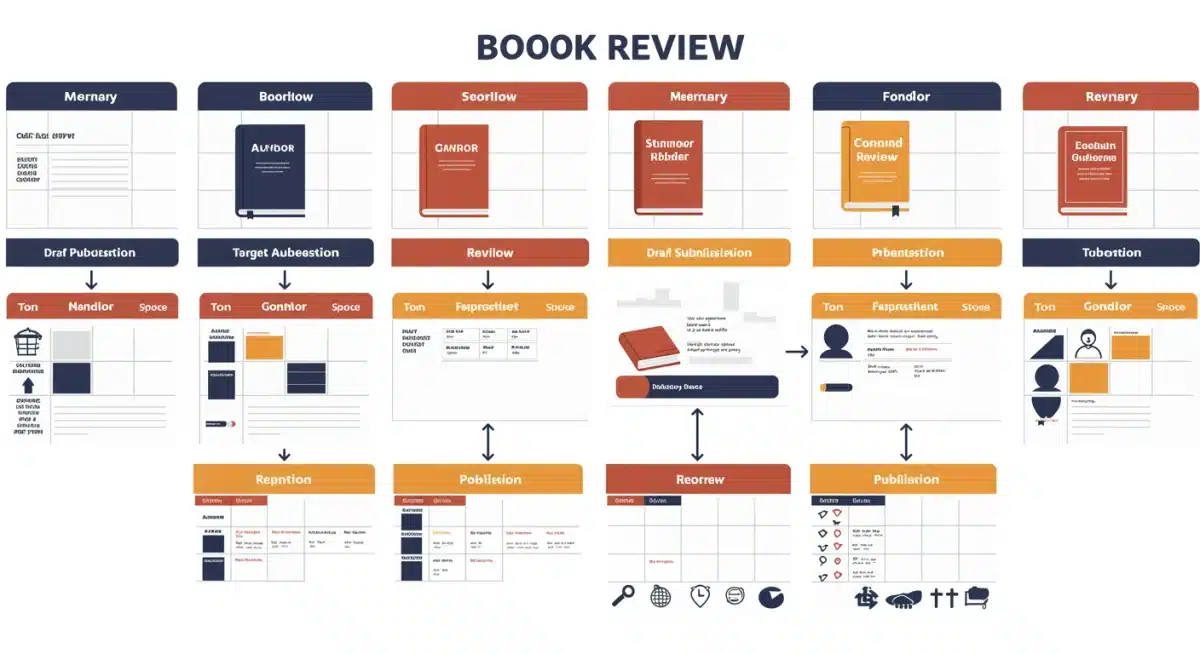
Consistency in promotion is also key. Schedule regular posts and stories to keep your content visible, and engage with comments and shares to foster a sense of community. This active promotion strategy is vital for anyone aiming to review 15 books monthly and build a vibrant online presence.
- Share review links on social media (Instagram, Twitter, Facebook, Pinterest).
- Cross-post snippets or key takeaways on Goodreads and other book-focused communities.
- Consider email newsletters to notify subscribers of new reviews.
Leveraging Technology and Automation
In the pursuit of reviewing 15 books monthly, technology becomes an invaluable ally. Automation tools and digital platforms can significantly reduce manual effort, streamline repetitive tasks, and free up more time for reading and writing. Embracing these resources is a smart move for any blogger seeking to scale their operations.
From scheduling social media posts to managing your reading list, various applications can enhance your productivity. The right tech stack can transform a chaotic workflow into a well-oiled machine, ensuring consistency and efficiency across all aspects of your book blogging. This integration allows for a more sustainable high-volume output.
Furthermore, technology can provide insights into your audience’s behavior and content performance, enabling data-driven decisions. Analytics tools can reveal which types of reviews resonate most, helping you refine your strategy. This continuous feedback loop is critical for ongoing improvement and achieving your goal to review 15 books monthly.
Tools for Content Scheduling and Management
Managing a high volume of content, such as 15 book reviews per month, necessitates robust scheduling and management tools. These platforms help organize your editorial calendar, track deadlines, and automate publishing tasks, ensuring a smooth and consistent content flow. Without them, maintaining such a pace would be exceedingly difficult.
Content management systems like WordPress, combined with editorial calendar plugins, can provide a centralized hub for all your blogging activities. Additionally, social media scheduling tools allow you to pre-plan promotional posts, ensuring your reviews get the visibility they deserve without constant manual intervention.
- Utilize WordPress’s native scheduling features for publishing posts.
- Employ tools like Buffer or Hootsuite for social media promotion.
- Leverage project management software (e.g., Trello, Asana) to track reading progress and review statuses.
These tools are essential for maintaining the organizational discipline required to review 15 books monthly effectively, freeing you to focus on the creative aspects of your blog.
Using AI for Research and Draft Assistance
Artificial intelligence (AI) tools are emerging as powerful assistants for bloggers striving to review 15 books monthly. While AI should never replace your unique voice and critical analysis, it can significantly aid in research, brainstorming, and even drafting initial summaries or outlines. This can drastically cut down on pre-writing time.
AI can quickly process large amounts of text, identifying key themes, characters, and plot points, which can then inform your note-taking and review structure. It can also help generate ideas for alternative angles or comparisons with other books, enriching your reviews with diverse perspectives. The judicious use of AI can enhance both speed and depth.
- Use AI to generate quick plot summaries (always fact-check and rewrite in your own words).
- Employ AI for brainstorming thematic connections or character analyses.
- Leverage AI to rephrase sentences or suggest synonyms during the editing phase.
Integrating AI responsibly into your workflow can provide a significant productivity boost, making the ambitious goal to review 15 books monthly more attainable and your reviews more comprehensive.
Building a Community and Monetization Strategies
A thriving book review blog is more than just a collection of articles; it’s a community. Fostering engagement with your readers builds loyalty, encourages discussions, and creates a vibrant space for book lovers. This community aspect is vital for long-term growth and can open doors to various monetization opportunities, making your passion sustainable.
Active participation in comments, hosting Q&A sessions, and creating interactive content like polls or reading challenges can deepen reader connection. When readers feel heard and valued, they become more invested in your blog’s success. This organic interaction is a powerful driver of consistent traffic and word-of-mouth promotion.
Monetization, when approached thoughtfully, can transform your blog from a hobby into a viable income stream. Diversifying revenue sources ensures stability and allows you to reinvest in your blog’s development. This strategic combination of community building and smart monetization creates a robust framework for a successful book review platform.
Engaging with Your Readership
Engaging actively with your readership is fundamental to building a loyal community around your book review blog. This interaction goes beyond simply publishing content; it involves creating a dialogue and making your readers feel like a part of your journey. Strong community ties lead to increased traffic and blog longevity.
Respond to comments on your blog posts and social media, fostering a conversational environment. Ask questions in your reviews that encourage readers to share their own thoughts and experiences with the books. This two-way communication makes your blog a dynamic and interactive space, essential for a blog that aims to review 15 books monthly.
- Reply thoughtfully to all comments on your blog and social media platforms.
- Host live Q&A sessions or discussions about books you’ve reviewed.
- Create reader polls or surveys to gather feedback and inform future content.
By prioritizing engagement, you transform your blog into a community hub, which in turn supports your ambitious goal to review 15 books monthly.
Exploring Monetization Avenues
For a book review blog, especially one striving to review 15 books monthly, exploring diverse monetization avenues is critical for sustainability and growth. Relying on a single income stream can be risky; a diversified approach provides financial stability and allows you to dedicate more resources to content creation. This strategy helps turn your passion into a profitable venture.
Affiliate marketing, particularly with booksellers like Amazon or Barnes & Noble, is a natural fit for book review blogs. Additionally, offering exclusive content through platforms like Patreon, selling merchandise, or collaborating with publishers for sponsored content can create significant revenue. Each avenue requires careful consideration to maintain authenticity and trust with your audience.
- Implement affiliate links for books mentioned in your reviews.
- Offer premium content, such as extended analyses or reading guides, through a subscription model.
- Seek out sponsored review opportunities with publishers or authors that align with your blog’s values.
By strategically integrating these monetization strategies, you can support your efforts to review 15 books monthly and build a sustainable, flourishing blog.
| Key Strategy | Implementation Detail |
|---|---|
| Strategic Book Selection | Choose diverse titles aligning with niche and audience preferences to review 15 books monthly. |
| Efficient Reading Process | Adopt active reading and structured time management to process books faster. |
| Quality Review Crafting | Utilize templates and strong writing for consistent, engaging, high-volume reviews. |
| SEO and Engagement | Implement keyword research and multi-platform promotion to boost visibility and community. |
Frequently Asked Questions About High-Volume Book Reviews
Achieving this requires a combination of strategic book selection, efficient reading techniques, and strict time management. Prioritize books within your expertise, use active reading to absorb information quickly, and schedule dedicated blocks for reading and writing. Automation tools also play a crucial role in managing the workload effectively.
Key tools include a content management system (like WordPress with an editorial calendar plugin), social media scheduling platforms (Buffer, Hootsuite), and note-taking apps (Evernote, Notion). AI tools can also assist with research and drafting. These technologies streamline processes, allowing you to review 15 books monthly with greater ease.
Quality is maintained through standardized review templates, thorough note-taking during reading, and dedicated editing time. A consistent structure ensures all vital aspects are covered, while efficient notes reduce the burden of recall. Focus on delivering insightful analysis rather than just summaries, ensuring each review adds value.
Absolutely. Monetization avenues include affiliate marketing with booksellers, sponsored reviews from publishers, premium content subscriptions (e.g., Patreon), and even selling merchandise. Diversifying income streams is key to sustainability and allows you to invest more time and resources into your blog, supporting your goal to review 15 books monthly.
Audience engagement is paramount. It builds a loyal community, drives repeat traffic, and enhances your blog’s authority. Actively responding to comments, hosting discussions, and leveraging social media interactions transforms readers into advocates. This community aspect is vital for long-term growth and success, supporting your efforts to review 15 books monthly.
Looking Ahead: The Future of High-Volume Book Blogging
The landscape for book bloggers aiming to review 15 books monthly is evolving, with technology and audience expectations driving significant shifts. Successful adaptation will hinge on integrating advanced tools, refining content strategies, and deepening community engagement. The ongoing development of AI assistance and enhanced analytics promises new efficiencies and personalized insights for content creators.
What happens now involves a continuous commitment to structured workflow and strategic content planning. Bloggers who consistently meet the challenge to review 15 books monthly will likely see their platforms grow in influence and reach. The focus remains on delivering authentic, high-quality reviews efficiently, while also nurturing a vibrant reader community.
Future developments point towards more interactive review formats and increased opportunities for direct author-blogger collaborations. Those who proactively embrace these trends, while maintaining their core dedication to insightful literary analysis, will be best positioned to thrive in the competitive but rewarding world of book blogging by 2026 and beyond.
